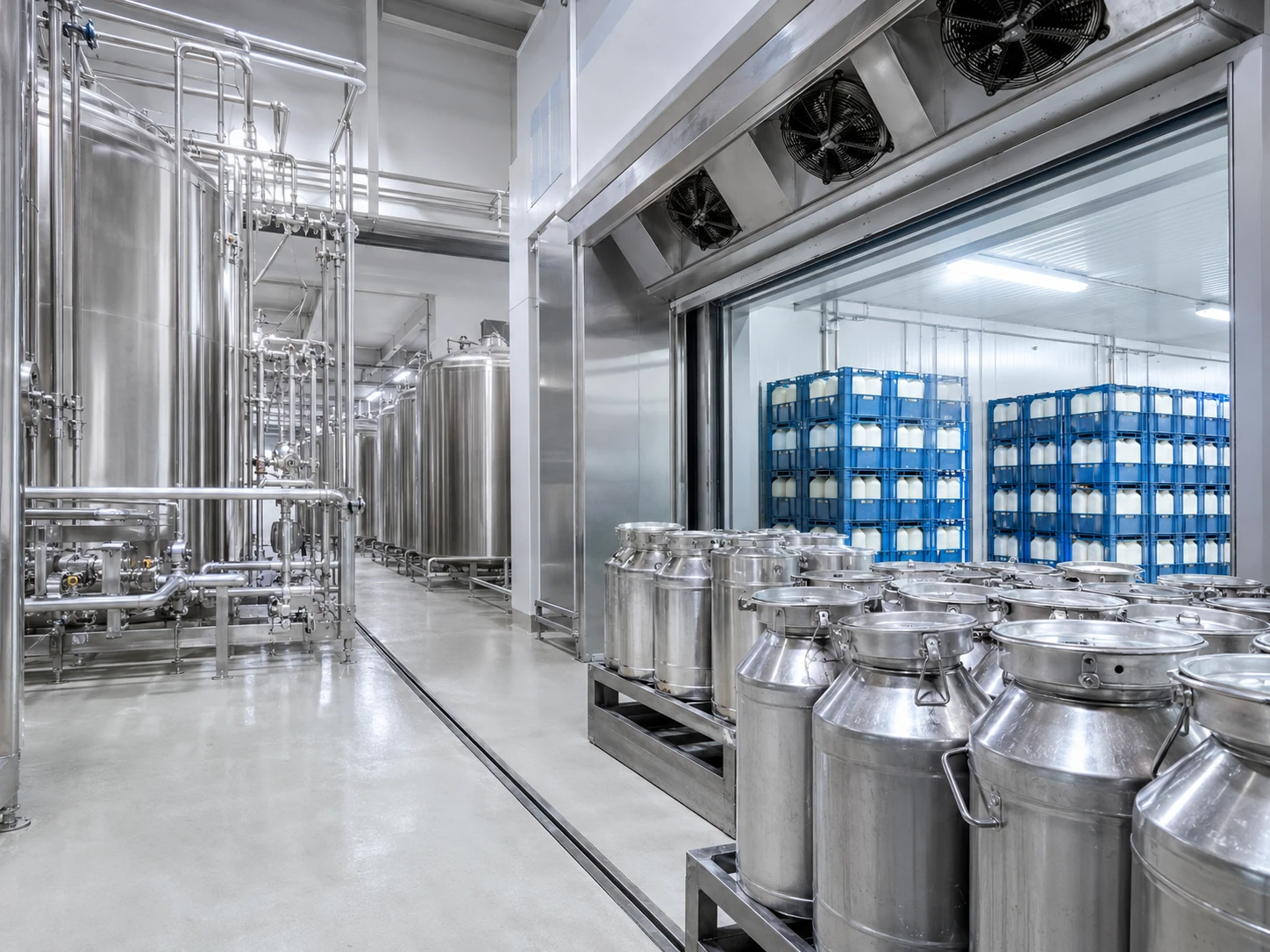
A reciprocating ammonia compressor in a dairy plant does much more than hold one cold room at one temperature. During milk reception it may see a sharp pull down load. A few hours later the same refrigeration plant may be serving chilled water, process cooling, packed product rooms or a lower temperature dairy section. Compressor selection has to follow that real load pattern, not just the motor size written on an old equipment plate.
For dairies in Pondicherry and Puducherry, the first engineering question is simple: what does the product need the refrigeration plant to do, and how quickly? Metalex lists its ammonia piston compressor range as reciprocating compressors for R717 industrial refrigeration. The current dairy refrigeration solutions page also places the design focus on milk chilling, process cooling, dairy cold rooms and continuous plant duty.
The compressor should match the real evaporating temperature, condensing condition and hourly refrigeration load. It should also fit the plant utilities, expected operating hours, service strategy and whether the dairy has only milk chilling or also cold rooms, curd, paneer, butter or frozen dairy production.
Why reciprocating ammonia compressors fit dairy refrigeration
Dairy production rarely gives a compressor one flat load all day. Milk collection has peaks. Chilled water demand changes when process equipment starts. Cold room doors open during packing and dispatch. Ice cream or frozen dairy sections can add a much lower temperature requirement. A reciprocating compressor is useful in this environment because the compressor family can be selected across different capacities, cooling arrangements and stage configurations.
Warm incoming milk creates a concentrated refrigeration load. The compressor has to recover temperature without forcing the entire plant into unstable operation.
Pasteurization support, chilled water and product coolers can run on a different schedule from raw milk reception.
Packed milk, curd, paneer, butter and other dairy products add room load, door load and infiltration that can continue after process cooling slows down.
Ice cream and frozen storage can move the design into a very different evaporating range compared with normal milk chilling.
This is why the search term ammonia compressor for dairy plant should not end with one model recommendation. First establish the dairy load. Then select the compressor series and the rest of the refrigeration plant around that load.
What the reciprocating compressor actually sees during a dairy shift
One of the easiest mistakes in a dairy expansion is adding all nameplate loads together and assuming they occur at the same time. In practice, the important number is the load profile. A dairy that receives most milk during a narrow collection window can need a different compressor strategy from a plant with a smoother intake through the day.
Daily litres, peak litres per hour, incoming temperature and the time allowed to reach the target chilling temperature.
Chilled water, glycol, pasteurization recovery, product coolers and any process vessel cooling that runs at the same time.
Cold room size, product entry temperature, door opening, insulation, holding temperature and dispatch pattern.
Ice cream, frozen storage or hardening duty should be separated because it can require a different compression arrangement.
Condenser performance and condensing pressure depend on the actual site condition, not only the indoor dairy temperature.
Hours per day, seasonal milk load, standby philosophy and expected production growth all change the sensible compressor selection.
Single stage or two stage ammonia compressor for dairy duty
There is no useful rule that says every dairy must use one stage configuration. The temperature level decides the pressure ratio, and the pressure ratio is one of the main reasons a lower temperature plant can move from single stage compression to two stage compression.
Milk chilling, chilled water and many medium temperature dairy loads can often be handled with single stage compression when the evaporating and condensing conditions remain within the correct operating range.
Compare ammonia piston compressor seriesFrozen dairy, ice cream hardening or lower temperature storage can create a larger pressure ratio. Those loads should be reviewed separately rather than forcing the milk chilling compressor to cover everything.
Review single and two stage IS Series optionsEstimate the milk chilling load before selecting a compressor
Use the sliders for a quick first pass. This calculator estimates only the sensible cooling required to chill milk. It does not include cold room heat gain, pumps, piping, process cooling, defrost, product holding load, condenser conditions or standby capacity.
How to select a reciprocating ammonia compressor for a dairy plant
Compressor selection becomes much clearer once the duty point is written down. For an industrial ammonia compressor, the useful starting data is evaporating temperature, condensing temperature, required refrigeration capacity, refrigerant, expected running hours and site utilities.
This links the compressor to the real product or secondary fluid temperature requirement.
This affects compressor power and capacity, so the condenser and local ambient condition cannot be treated as separate topics.
Use the calculated peak duty and realistic diversity, not only the sum of connected equipment nameplates.
Water cooled and air cooled compressor choices should reflect actual water availability, water quality and maintenance preference.
Dairy loads move through the day. Capacity control and practical compressor staging should match that pattern.
Access for valves, oil system, drive components, inspection and genuine spares matters in a plant expected to run continuously.
Metalex T Series reciprocating ammonia compressor links
The current Metalex T Series is an air cooled reciprocating ammonia compressor range for industrial refrigeration. These model links are useful for engineers comparing swept volume, cylinder count and reference capacity before a final duty calculation.
If compressor cooling water is dependable, the MX water cooled ammonia compressor range gives another reciprocating compressor route. Where compressor cooling water is limited or not preferred, the IS air cooled ammonia compressor range and T Series air cooled ammonia compressor range can be reviewed against the actual duty.
The compressor is only one part of the dairy refrigeration system
A strong compressor cannot correct a weak condenser, poor refrigerant feed or badly arranged vessel system. When a dairy asks why power is high or temperature recovery is slow, the full refrigerant circuit should be reviewed before blaming the compressor.
WITT equipment and genuine spare support for dairy refrigeration
A dairy refrigeration plant depends on more than the compressor. Refrigerant circulation, vacuum duty, valves, service access and spare availability all influence uptime. Metalex supports dairy projects with selected WITT equipment and genuine spare support alongside the core ammonia refrigeration plant.
Vacuum pump option shown in the dairy creative for process and plant support applications.
Explore WITT products WITT Refrigerant Pump SolutionsRefrigerant circulation equipment for pumped ammonia systems and industrial refrigeration applications.
View WITT range Metalex Support Genuine Compressor Spare PartsPlanned spare support for maintenance, overhaul and downtime reduction across Metalex compressor installations.
Get spare support Plant Equipment Vessels, Valves and ControlsSupporting refrigeration equipment that helps the compressor operate inside a stable and serviceable ammonia system.
Explore plant equipmentWhat changes when the dairy plant is in Pondicherry
The compressor still follows refrigeration fundamentals, but the site changes the numbers used in the calculation. Pondicherry is a coastal location, so the design should pay attention to condenser placement, outdoor heat rejection, equipment ventilation, water quality, corrosion exposure and maintenance access.
Use the real summer design condition when checking condenser duty and compressor capacity.
If compressor or condenser cooling depends on water, treatment and long term water quality need to be part of the equipment decision.
Coastal sites need practical inspection, cleaning and equipment placement so corrosion does not quietly reduce reliability.
Puducherry has an active dairy collection network, so plant design should consider the real timing and quantity of incoming milk rather than only daily average litres.
From reciprocating ammonia compressor selection to a complete dairy project
If the requirement includes milk reception, pasteurization, homogenization, curd, dahi, ice cream, cold rooms, process utilities or plant expansion, the compressor is only one work package. Refrigeration Projects is the project route for complete dairy and refrigeration planning.
What to send before asking for a compressor model
For compressor only discussions, start with the Metalex reciprocating ammonia compressor range and contact the engineering team. For a complete dairy line or refrigeration upgrade, start with turnkey dairy project planning.
Reciprocating ammonia compressor for dairy plants FAQ
A reciprocating ammonia compressor can suit dairy plants because milk chilling, process cooling, cold rooms and production peaks create changing refrigeration loads. A piston compressor range can be selected around the required evaporating condition, condensing condition, refrigerating capacity and plant utilities.
Around 4°C is a common engineering target for chilled milk handling. Final settings should be confirmed from the milk reception method, process requirement, holding time and applicable food safety procedure.
It depends on the temperature level and pressure ratio. Milk chilling and medium temperature dairy duties can often use single stage compression, while lower temperature freezing duties may require two stage compression or a separate low temperature system.
It can be suitable where reducing compressor cooling water is useful. Final selection still needs the actual refrigeration load, ambient condition, condenser arrangement, available utilities and the complete R717 plant design.
Share the dairy product, milk quantity, incoming and target temperature, cold room temperatures, operating hours, evaporating temperature, condensing condition, project location, available power, water condition and whether the requirement is a new plant or an upgrade.
No. Compressor efficiency depends on the complete system. Condenser performance, refrigerant circulation, vessel sizing, evaporator feed, controls, piping, maintenance condition and actual operating temperatures all influence power and capacity.
Yes. Metalex provides industrial refrigeration equipment and compressor support, while Refrigeration Projects covers turnkey dairy project discussions including milk processing plants, curd and dahi plants, ice cream plants, cold storage and plant upgrades.
Need a reciprocating ammonia compressor for a dairy plant?
Share the milk load, product mix, incoming temperature, target temperature, evaporating condition, condensing condition, operating hours and Pondicherry project location. Metalex can review the compressor duty and the supporting refrigeration system.