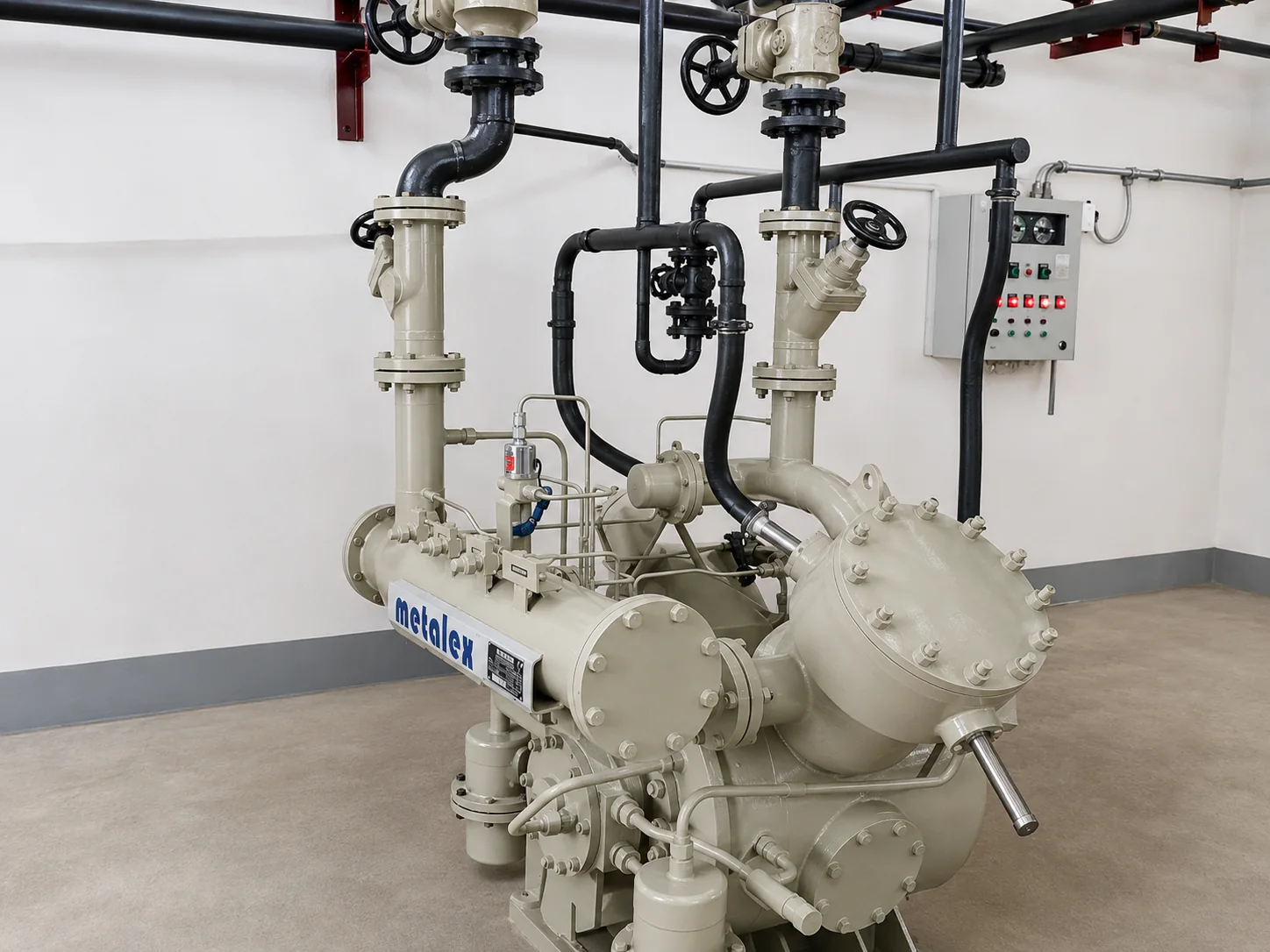
Cold storage works by removing heat from an insulated room and rejecting that heat outside. The system keeps repeating this process so the room and stored product remain within a defined temperature and humidity range.
This is an important distinction: refrigeration equipment does not simply “produce cold.” It moves heat. Whenever warm product enters, a door opens, lights operate, people work inside or heat passes through the building envelope, the refrigeration system must remove that additional heat.
What heat must a cold storage plant remove?
The equipment is selected for the total refrigeration load, not only the room size. Major heat loads include:
- Product load: heat removed from incoming produce, food or material until it reaches storage temperature.
- Transmission load: heat entering through walls, roof, floor, doors and structural connections.
- Infiltration load: warm, humid outdoor air entering when doors open or seals leak.
- Internal load: people, lights, evaporator fan motors, forklifts and other equipment.
- Respiration load: living fruits and vegetables continue biological activity and release heat after harvest.
- Defrost and operational load: heat added during defrost or cleaning and recovery after loading.
The daily loading rate and incoming product temperature can be more important than total storage capacity. A room receiving a large quantity of warm produce each day needs much more pull-down capacity than a room that only holds already chilled goods.
The four stages of the refrigeration cycle
| Stage | What happens | Where it happens |
|---|---|---|
| 1. Evaporation | Low-pressure refrigerant absorbs heat and changes state as it cools the air or secondary fluid. | Evaporator or air cooler inside/serving the cold room. |
| 2. Compression | The compressor draws low-pressure refrigerant vapour and raises its pressure and temperature. | Compressor room or packaged refrigeration unit. |
| 3. Condensation | The hot, high-pressure refrigerant rejects heat and condenses. | Evaporative, water-cooled or air-cooled condenser. |
| 4. Expansion | Pressure is reduced before refrigerant returns to the evaporator and absorbs heat again. | Expansion valve, float system or refrigerant feed arrangement. |
The cycle is continuous. Controls start, stop or unload equipment to match the changing refrigeration load while maintaining the required room conditions.
The purpose of the refrigeration cycle is simple: collect unwanted heat inside the cold store, carry it through the system and release it outside.
Main components of a cold storage system
- Insulated envelope: PUF/PIR panels, vapour barriers, insulated floors and sealed doors reduce heat and moisture entry.
- Evaporators or air coolers: circulate room air across a cold heat exchanger.
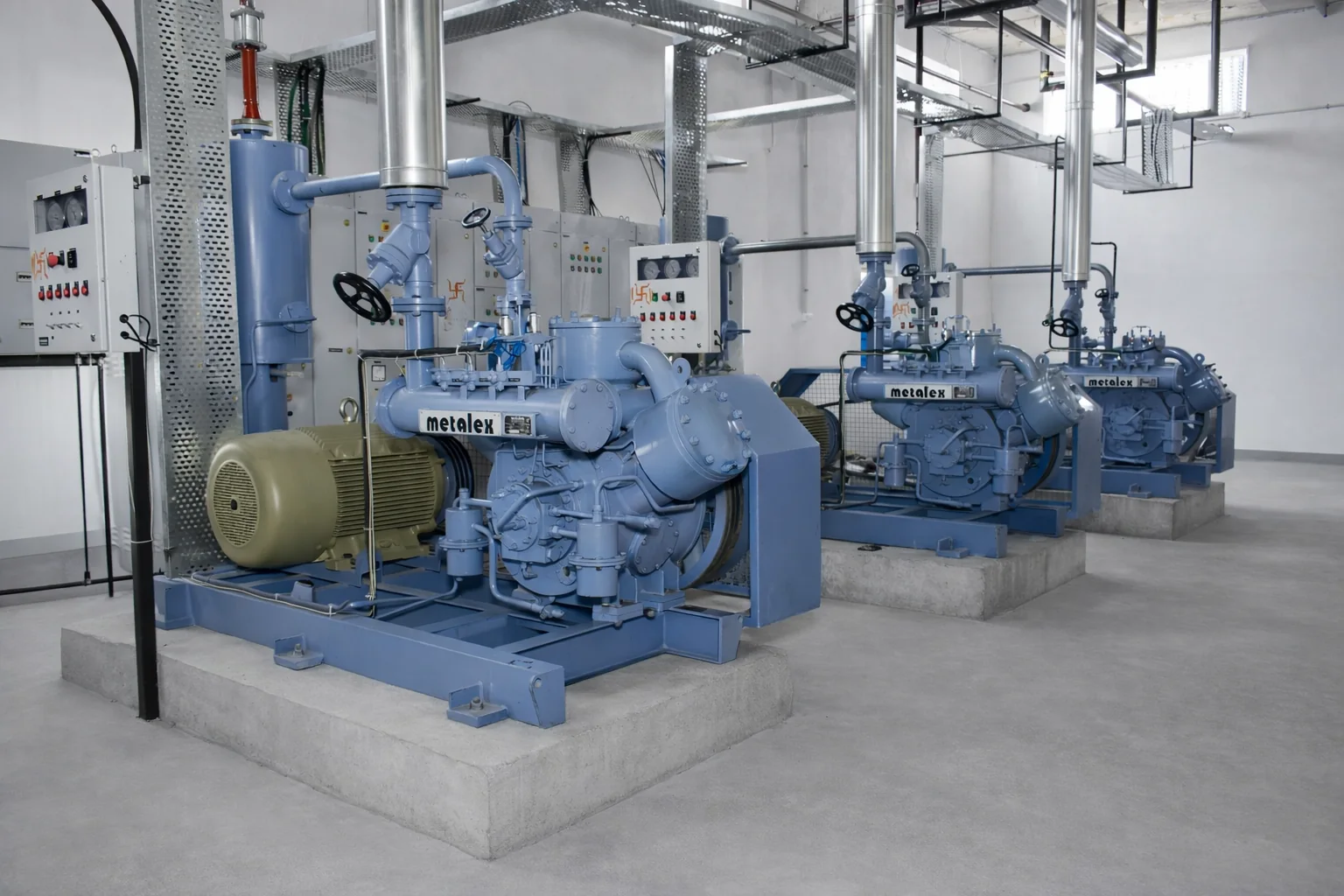
- Compressors: maintain refrigerant circulation and pressure difference. Large industrial plants may use ammonia reciprocating or screw compressors depending on duty.
- Condensers: reject the total heat absorbed in the cold room plus compressor energy.
- Refrigerant vessels, pumps and valves: manage refrigerant feed, separation, storage and control in industrial systems.
- Controls and sensors: measure temperature, pressure, humidity, level and equipment status.
- Safety systems: alarms, ventilation, pressure protection, emergency controls and refrigerant detection as required by the plant design.
Why airflow and humidity matter
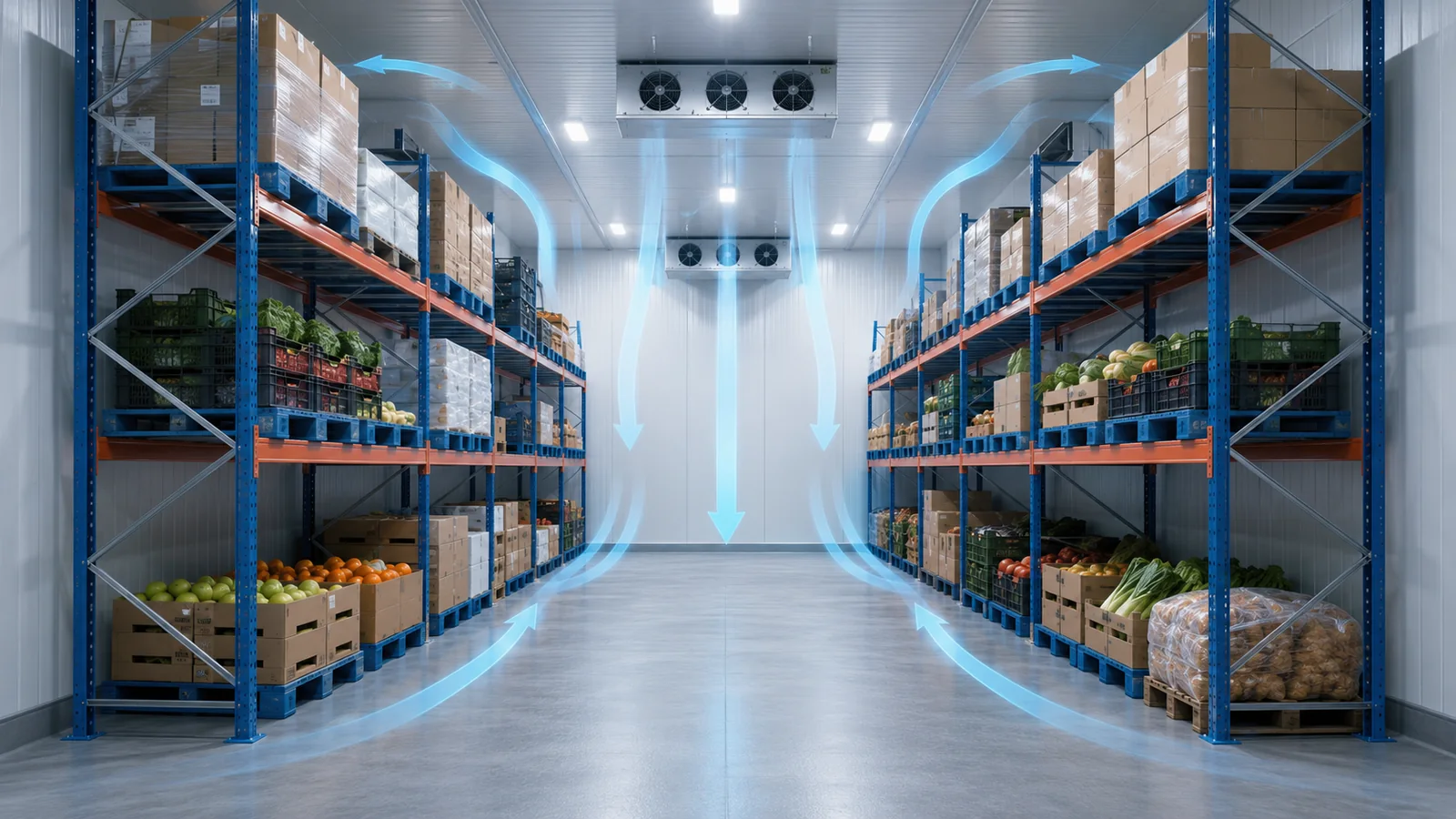
Room temperature alone does not prove that a cold store is working correctly. Air must circulate through the stored load so heat can reach the evaporator. Poor stacking, blocked evaporators or insufficient clearance can create warm pockets even when the sensor near the air cooler shows the correct temperature.
Humidity also affects product quality. Many fruits and vegetables require high relative humidity to limit moisture loss, while onion, garlic, seed and certain packaged products may need different conditions. Excess moisture on cold surfaces can cause frost, ice and packaging damage; insufficient humidity can cause weight loss and shrivelling.
- Maintain airflow paths around pallets, crates or bags.
- Keep evaporator inlets and outlets clear.
- Use suitable door curtains, air curtains or vestibules where traffic is frequent.
- Coordinate defrost so ice does not progressively reduce coil performance.
- Place sensors where they represent product and room conditions—not only supply air.
What happens from receiving to dispatch?
| Step | Operational purpose |
|---|---|
| Receiving and inspection | Check product condition, temperature, packaging, quantity and batch information. |
| Pre-cooling or pull-down | Remove field or process heat quickly when the commodity requires it. |
| Storage | Maintain defined temperature, humidity, airflow and stock rotation. |
| Monitoring | Record room/product temperature, alarms, door events and refrigeration performance. |
| Order preparation | Pick, grade, pack or stage the product without unnecessary temperature exposure. |
| Dispatch | Transfer to insulated or refrigerated transport while protecting the cold chain. |
Different cold stores operate at different temperatures
“Cold storage” is not one temperature. A chilled room for fresh produce, a ripening chamber, a dairy room and a frozen food store have different design duties.
- Cool or controlled rooms: often used for selected fruits, vegetables, seeds or ingredients above freezing.
- Chilled storage: commonly used for dairy, processed foods, meat or short-term distribution at low positive temperatures.
- Frozen storage: maintains product below freezing, frequently around -18°C or lower depending on product and process.
- Controlled/modified atmosphere storage: combines temperature management with controlled gas composition for suitable produce.
- Ripening chambers: manage temperature, airflow, humidity and ripening gas in a controlled sequence.
Final conditions must be based on the specific commodity, variety, packaging, desired storage life and applicable food or customer requirements.
How a cold storage system stays efficient and safe
Efficiency comes from correct design and disciplined operation. Common measures include suitable compressor staging or capacity control, clean heat-transfer surfaces, correct refrigerant charge and levels, low door-open time, maintained insulation, floating pressure strategies where appropriate and regular review of energy consumption per tonne handled.
Safety is a plant-wide responsibility. Industrial refrigerants and pressure systems require competent design, trained personnel, ventilation, detection, relief arrangements, operating procedures and emergency planning. Safety provisions must be based on the refrigerant, charge, machinery-room design and applicable standards.
Frequently asked questions
Does a cold storage room create cold air?
It removes heat from room air and product. The evaporator absorbs heat, and the refrigeration system transfers that heat to the condenser for rejection outside.
Why does cold storage need insulation?
Insulation and vapour barriers reduce heat and moisture entering the room. Poor insulation increases refrigeration load, condensation risk and energy use.
What is the role of the compressor?
The compressor maintains refrigerant circulation and raises vapour pressure so absorbed heat can be rejected at the condenser.
Why is pre-cooling important?
Pre-cooling rapidly removes field heat before long-term storage or transport. It can be critical for product quality and reduces the burden on the holding room.
Technical references
Prepared using standard vapour-compression principles and checked against the NCCD engineering and cold-chain guidance portal and the Ministry of Food Processing Industries cold-chain scheme overview.
Temperature and humidity values must be finalized for the specific product and applicable standards. This article is an educational overview, not a final plant design.