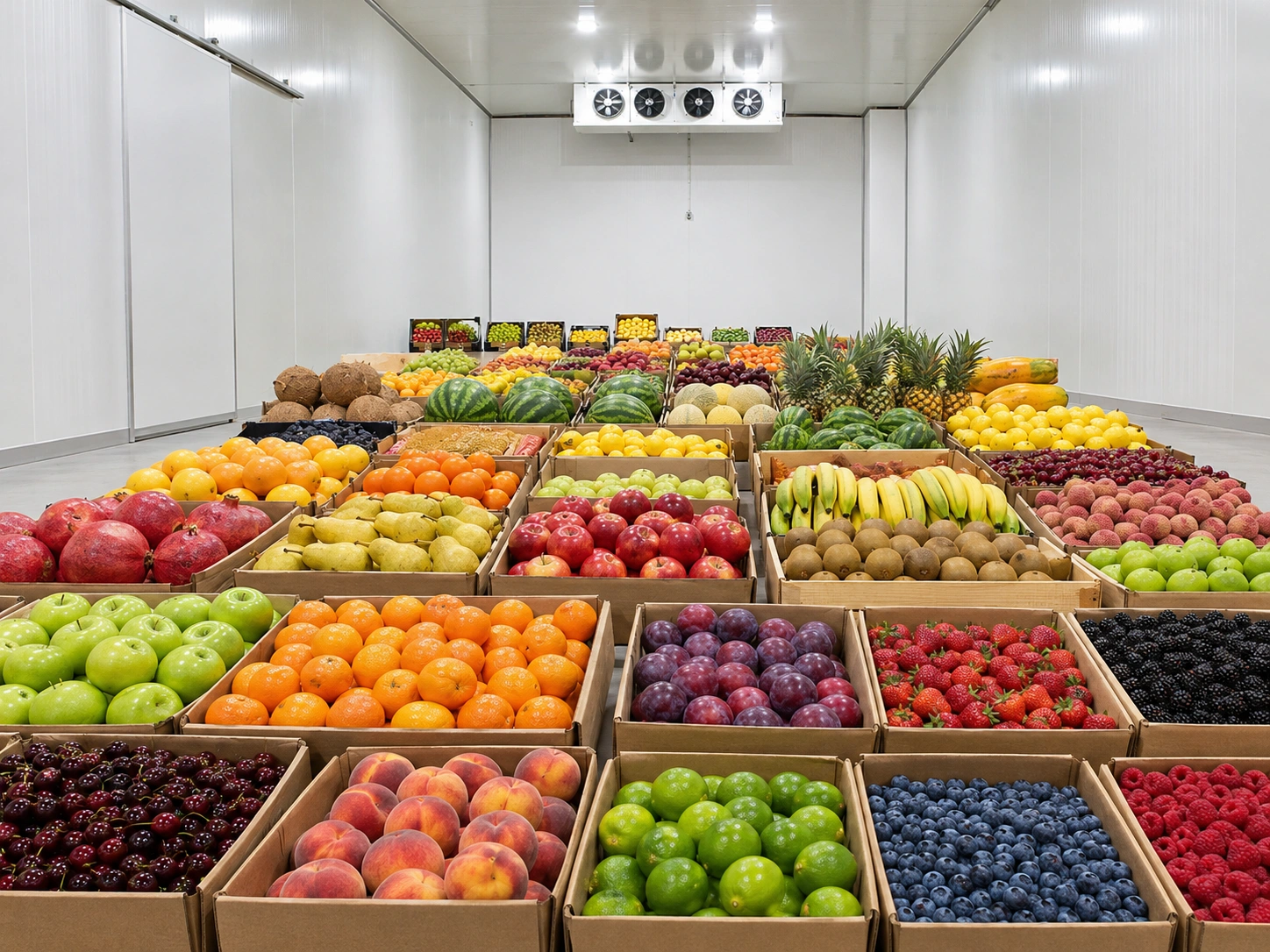
Search for a fruit cold storage temperature chart and one thing becomes clear: there is no universal room setting for every fruit. Apples and grapes can be stored close to 0°C, while bananas, mangoes, lemons and papaya need much warmer conditions to avoid chilling injury.
This guide focuses only on fruits. The first rows reflect the fruit applications already represented in the Metalex fruit storage project range Apple, Lemon and Berries followed by a wider commercial fruit reference covering temperature, relative humidity, approximate storage life and practical handling conditions that most often changes a real cold-room project.
Temperate fruits often store near 0°C with high RH, but tropical fruits can suffer chilling injury at those temperatures. The correct setpoint depends on commodity, cultivar, maturity, intended storage duration and whether the room is for storage, transport or ripening.
Fruit cold storage temperature chart
The chart below targets practical searches such as optimal temperature for apple storage, banana storage temperature, mango cold storage temperature, lemon cold storage temperature, grape, berry, citrus and other fruit-storage conditions. Use it as a technical starting reference; cultivar, maturity, packaging and desired holding time can change the final setpoint.
| Commodity | Optimal temp | RH | Approx. storage life | Special condition |
|---|---|---|---|---|
| AppleFruit | 0–4°C | 90–95% | 1–12 months | Cultivar and storage program matter; some apples need a warmer setpoint. Ethylene: High producer; sensitive. |
| LemonFruit | 10–12°C | 85–90% | 6–8 weeks typical | Cultivar, maturity and storage duration can justify a warmer program. Ethylene: Very low producer. |
| BerriesFruit | 0–2°C | 90–95% | 2–7 days typical | Delicate fruit; rapid pre-cooling, high RH and an uninterrupted cold chain are essential. Ethylene: Very low producer. |
| ApricotFruit | −1 to 0°C | 90–95% | 1–3 weeks | Rapid cooling helps protect firmness and reduce water loss. Ethylene: High producer; sensitive. |
| Avocado, ripeFruit | 3–7°C | 85–95% | Short hold | Ripe fruit tolerates colder storage than hard, unripe fruit. Ethylene: High producer; sensitive. |
| Avocado, unripeFruit | 7–10°C | 85–95% | Maturity dependent | Keep away from strong ethylene sources unless ripening is intended. Ethylene: Low producer; very sensitive. |
| Banana, greenFruit | 13–14°C | 90–95% | 2–4 weeks typical | Do not store near 0°C; chilling injury becomes a major risk. Ethylene: Sensitive. |
| Banana, ripeFruit | 13–16°C | 85–95% | Short hold | Use stable temperature after ripening; avoid unnecessary chilling. Ethylene: Medium producer. |
| BlackberryFruit | 0–1°C | 90–95% | 2–3 days | Very perishable; pre-cooling and clean handling are critical. Ethylene: Very low producer. |
| BlueberryFruit | 0–2°C | 90–95% | 1–2 weeks typical | Keep the cold chain tight and avoid condensation. Ethylene: Very low producer. |
| Cherry, sweetFruit | −1 to 0°C | 90–95% | 2–3 weeks | Cool quickly after harvest and maintain high humidity. Ethylene: Low. |
| CoconutFruit | 12–15°C | 80–85% | Variety dependent | Storage condition varies with maturity and intended holding period. Ethylene: Low. |
| CranberryFruit | 3–6°C | 90–95% | Several weeks | Stable cool storage helps limit dehydration. Ethylene: Low. |
| FigFruit | 0–2°C | 90–95% | About 1 week | Soft fruit; minimise handling and cool promptly. Ethylene: Low producer. |
| GrapefruitFruit | 13–16°C | 90–95% | Several weeks | Chilling sensitivity means citrus should not be treated like apples. Ethylene: Very low producer. |
| Table GrapesFruit | −1 to 0°C | 90–95% | 2–8 weeks | Fast field-heat removal and stable RH are important. Ethylene: Very low producer; sensitive. |
| GuavaFruit | 7–10°C | 90–95% | 2–3 weeks typical | Lower temperatures may cause chilling injury depending on maturity. Ethylene: Medium producer; sensitive. |
| KiwiFruit | 0–2°C | 90–95% | 2–6 months typical | Keep unripe fruit away from ethylene unless ripening is desired. Ethylene: Ripe: high producer; sensitive. |
| LimeFruit | 9–13°C | 90–95% | Several weeks | Avoid excessively low temperatures that can damage peel quality. Ethylene: Very low producer. |
| LycheeFruit | 4–7°C | 90–95% | 2–4 weeks typical | Rapid cooling and moisture-loss control help protect colour and texture. Ethylene: Very low producer. |
| MangoFruit | 10–13°C | 90–95% | 2–3 weeks typical | Mature-green and ripe fruit should not share one setpoint. Ethylene: Medium producer; sensitive. |
| CantaloupeFruit | 2–4°C | 90–95% | 1–3 weeks typical | More mature fruit can require a different holding condition. Ethylene: Medium producer; sensitive. |
| Honeydew MelonFruit | 10–13°C | 85–95% | 2–3 weeks typical | Riper melons may tolerate a slightly colder program. Ethylene: Medium producer; sensitive. |
| NectarineFruit | −1 to 0°C | 90–95% | 2–4 weeks | Avoid freezing and manage cultivar-specific chilling sensitivity. Ethylene: High producer. |
| OrangeFruit | 4–7°C | 90–95% | 3–8 weeks typical | Final range depends on cultivar, maturity and growing region. Ethylene: Very low producer. |
| PapayaFruit | 10–13°C | 85–95% | 1–3 weeks typical | Ripe fruit may use a cooler short-hold program; avoid chilling. Ethylene: Medium producer; sensitive. |
| PeachFruit | −1 to 0°C | 90–95% | 2–4 weeks | Cultivar and maturity influence chilling behaviour. Ethylene: High producer; sensitive. |
| PearFruit | −1 to 0°C | 90–95% | 2–7 months | Long-term storage depends heavily on cultivar and ripening plan. Ethylene: High producer; sensitive. |
| PineappleFruit | 10–13°C | 85–95% | 2–4 weeks typical | Too-cold storage can cause internal injury. Ethylene: Very low producer. |
| PlumFruit | −1 to 0°C | 90–95% | 2–5 weeks | Watch cultivar-specific chilling injury during longer holding. Ethylene: High producer; sensitive. |
| PomegranateFruit | 5–7°C | 90–95% | 1–3 months typical | Longer storage may need a slightly warmer condition to limit chilling injury. Ethylene: Low. |
| RaspberryFruit | −1 to 0°C | 90–95% | 2–3 days | One of the most perishable fruits; cool immediately. Ethylene: Very low producer. |
| StrawberryFruit | 0–1°C | 90–95% | 3–7 days | Rapid pre-cooling and gentle handling are essential. Ethylene: Very low producer. |
| Mandarin / TangerineFruit | 4–7°C | 90–95% | 2–6 weeks | Cultivar and maturity change the safe lower temperature. Ethylene: Very low producer. |
| WatermelonFruit | 10–15°C | 85–90% | 2–3 weeks typical | Keep away from strong ethylene sources and avoid chilling. Ethylene: Sensitive. |
These values are practical engineering starting ranges for fruit cold storage. Final room conditions should be confirmed for the exact fruit, cultivar, maturity, packaging, holding period and operating objective.
Why colder is not always better for fruit
A good cold store slows respiration and water loss without pushing the product into chilling or freezing injury. That balance is why an apple room can operate close to 0°C while a green banana room is normally around 13–14°C. If banana, mango, papaya or sensitive citrus is simply put into the coldest available chamber, peel damage, uneven ripening, flavour loss or internal injury can follow.
Apples, grapes, berries, peaches, pears and similar fruits often benefit from low temperature and high RH.
Mandarins, lychee and selected citrus varieties sit between near-freezing and tropical storage zones.
Banana, mango, pineapple, papaya, lemon and similar fruits need warmer cold-chain conditions.
The right temperature can change with cultivar, ripeness, storage duration and whether the room is for storage or controlled ripening.
Storage temperature is not the same as ripening temperature
This is one of the biggest gaps in generic temperature charts. A banana or mango may be transported and stored at one temperature, then moved to a deliberately warmer ripening chamber. Treating ripening and storage as the same process can produce uneven colour, poor texture and unnecessary losses.
| Commodity | Typical storage | Controlled ripening | Why it matters |
|---|---|---|---|
| Banana, green | 13–14°C | 15–18°C | Ripening room temperature is intentionally warmer than transport/storage. |
| Mango | 10–13°C | 20–22°C | Mature-green fruit and ripe fruit should not be handled as one condition. |
| Papaya | 10–13°C | 20–25°C typical ripening | Maturity at harvest strongly affects the correct program. |
| Pear | −1 to 0°C | 18–22°C typical ripening | Long-term cold storage is followed by controlled ripening when required. |
| Avocado, unripe | 7–10°C | 18–24°C typical ripening | Ethylene may be used in a controlled ripening program. |
Best way to store fruit in a commercial cold room
The best way to store fruit is not to chase one perfect thermostat number. Start by removing field heat, then hold the product inside a narrow, stable band while protecting humidity and airflow. In a real warehouse, door openings, warm incoming loads and blocked pallet lanes can raise product temperature even when the room display looks correct.
- Pre-cool quickly: lower product-core temperature before long-term holding when the commodity and process require it.
- Group compatible commodities: do not combine products only because their target temperatures look similar.
- Control humidity: low RH causes weight loss; excessive free moisture can increase decay risk.
- Keep airflow open: coil air must reach the product through crates, pallets and racks.
- Manage ethylene: strong producers can speed ripening or quality loss in sensitive produce.
- Protect the complete cold chain: loading dock exposure and dispatch conditions can undo good storage.
For project planning, review fruit storage solutions, lemon cold storage, fruit ripening chambers and fruit pack houses. These project types cover storage, controlled ripening, pre-cooling, sorting, grading, packing and dispatch planning for commercial fruit supply chains.
Turning a temperature chart into a refrigeration system
A 5,000 MT apple store and a 5,000 MT banana or mango facility do not become the same project because all three store fruit. The refrigeration load changes with incoming product temperature, daily intake, pull-down time, chamber size, insulation, ambient condition, door opening, air circulation, humidity target and whether the facility includes pre-cooling or ripening rooms.
Metalex can review the complete refrigeration chain: reciprocating ammonia compressors, evaporative condensers, vessels, controls and other industrial refrigeration plant equipment. Depending on site utilities, the compressor study can include the MX water-cooled compressor range or MXT air-cooled ammonia compressors.
Before asking for a compressor model, share the commodity, storage capacity, incoming product temperature, target room temperature, RH, expected storage period, daily loading, chamber dimensions, project location and available utilities. That information allows the team to size the refrigeration system around the product instead of forcing the product around a catalogue machine. For complete project scope, see Metalex turnkey refrigeration projects or contact the engineering team.
Fruit cold storage FAQ
There is no universal temperature for every fruit. Many temperate fruits such as apples, grapes and berries are stored near 0°C, while tropical and subtropical fruits such as bananas, mangoes, papaya and citrus often need warmer conditions to avoid chilling injury.
For many commercial apple programs, about 0–4°C with 90–95% relative humidity is a practical starting range. Cultivar, controlled-atmosphere strategy and storage duration can change the final setpoint.
Metalex lemon cold-storage guidance uses around 10–12°C with 85–90% relative humidity. Final settings should still be selected according to variety, storage duration and packing method.
Green bananas are commonly stored around 13–14°C with high relative humidity. Temperatures that are too low can cause chilling injury and poor ripening.
No. Apples, berries, bananas, mangoes, citrus and melons can have different temperature, humidity, ethylene and ripening requirements. Commercial facilities often use separate chambers or compatible fruit groupings.
Remove field heat quickly, use the correct fruit-specific temperature and humidity, maintain uniform airflow, manage ethylene compatibility, reduce door exposure and protect the cold chain through loading and dispatch.
Need the right storage condition for your fruit?
Share the fruit, capacity, incoming temperature, target temperature, humidity requirement, storage duration and project location. Metalex can review the cold-room duty and refrigeration concept.