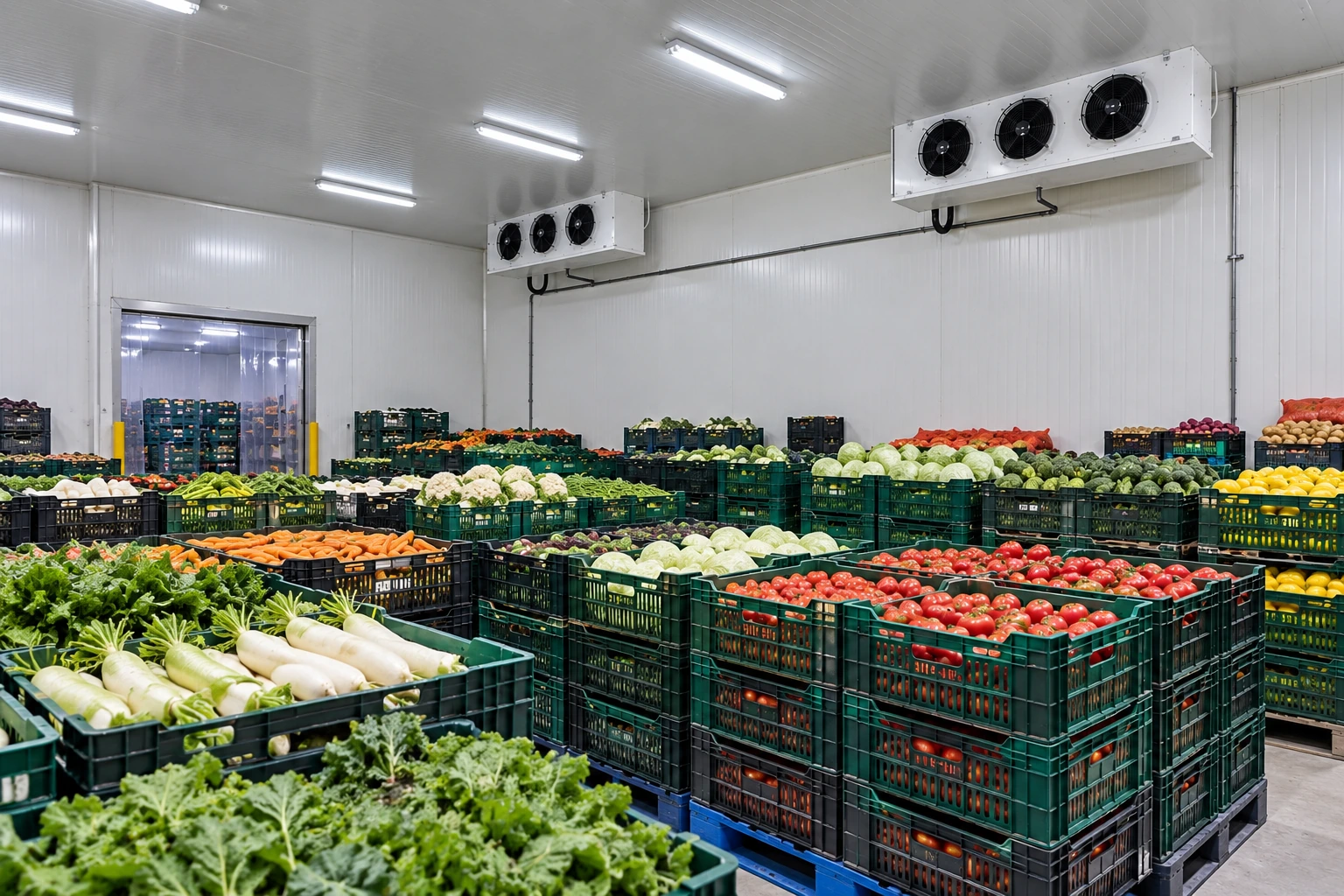
Cold storage trends in 2026 are moving in one clear direction: facilities are becoming more automated, more energy conscious, more connected and more flexible. E commerce, food processing, pharmaceuticals and temperature sensitive distribution are increasing the need for reliable cold chain infrastructure, while operators are paying closer attention to power consumption, storage density, labour exposure and future expansion.
The strongest cold storage trends for 2026 are automation and ASRS, energy efficient refrigeration, real time monitoring, flexible temperature zones, high density layouts and coordinated PEB and insulation design. The best results come when these systems are planned together instead of being added one by one after construction.
Why cold storage design is changing in 2026
Modern cold storage is no longer only a refrigerated room with racking. Owners are planning complete operating environments around product flow, storage temperature, humidity, loading frequency, pallet movement, refrigeration load, utilities and expansion. This is especially important for multi commodity facilities where chilled, frozen and temperature controlled products may need different operating zones.
Metalex cold storage project solutions are planned around product behaviour, holding period, target temperature, humidity, air circulation, loading pattern and handling requirement. That project first approach fits the way new cold chain facilities are now being designed.
1. Automation and ASRS are moving into the cold room
Automation is one of the most visible cold storage trends. Automated Storage and Retrieval Systems, pallet shuttles, robotic handling and warehouse management systems can reduce routine movement inside low temperature rooms while increasing storage density and inventory accuracy.
The important design lesson is that automation should be considered early. Clear height, rack geometry, floor loading, equipment routes, electrical supply, fire strategy, airflow and refrigeration distribution all need to work with the selected automation concept. An ASRS layout can also change the way cold air is distributed because a high density rack arrangement creates a very different airflow path from an open manual warehouse.
2. Energy efficient cold storage is becoming a design priority
Refrigeration is central to cold storage power demand, so efficiency starts with the complete system. The building envelope influences heat gain, the evaporating condition influences compressor duty, the condensing condition influences pressure lift, and doors and loading activity influence how much warm air enters the facility.
For larger industrial duties, Metalex R717 reciprocating ammonia compressors are selected around refrigeration capacity, evaporating temperature, condensing temperature, operating hours, ambient condition and available utilities. The MXT Series adds an energy efficient air cooled option for industrial refrigeration projects where no compressor water cooling is required.
Energy planning should also include insulation thickness, vapour sealing, fast door operation, chamber zoning, condenser performance and capacity control. These measures reduce unnecessary refrigeration load before additional equipment is considered.
3. IoT monitoring is changing how cold stores are supervised
Real time temperature and humidity monitoring is becoming a basic expectation in modern cold storage. Connected sensors can provide continuous records, alarm notification and trend visibility instead of relying only on periodic manual readings. This is valuable for food, pharmaceutical and other temperature sensitive products where storage conditions must remain consistent.
The refrigeration plant also benefits from organised monitoring. Metalex industrial refrigeration plant equipment includes PLC based control panels for automation and monitoring alongside compressors, condensers, vessels, valves and purgers. IoT platforms can sit above this plant level information where the project requires wider data visibility.
As more devices become connected, access control, network permissions and data management should be included in the facility IT plan from the beginning.
4. Flexible temperature zones are replacing rigid layouts
A facility designed for one product for its entire life can become restrictive as customer demand changes. Flexible cold storage uses separate chambers, modular planning and multi temperature operating zones so chilled, frozen and other controlled products can be handled within the same project.
In a temperature controlled cold storage project, the PEB structure, insulated envelope, refrigeration system, electrical services and automation should be coordinated from the planning stage. Metalex can support the refrigeration and overall cold storage project engineering scope based on commodity, storage time, site conditions and available utilities.
5. PEB, insulation and refrigeration must be designed together
Pre Engineered Buildings can support faster project execution and large clear span layouts, but the cold storage envelope still needs careful coordination. Panel joints, doors, roof details, floor insulation, vapour sealing and service penetrations all influence heat ingress.
For this reason, the refrigeration load should be connected to the building design early. A better insulated envelope can reduce heat gain, while a well planned high density layout can improve storage capacity without unnecessarily increasing refrigerated volume.
6. R717 ammonia remains important for industrial cold storage
Natural refrigerant planning is another important theme in industrial refrigeration. Metalex focuses on R717 ammonia piston compressors for cold storage, food processing, dairy, fisheries, ice plants and process cooling. Supporting equipment such as condensers, pressure vessels, valves, controls and refrigeration purgers allows the compressor to be considered as part of the complete ammonia system.
The key design point is system matching. Compressor capacity, evaporating condition, condenser duty, liquid management, controls and chamber load should be evaluated around the same operating requirement.
What should a cold storage owner prioritise in 2026?
| Planning area | 2026 priority | Why it matters |
|---|---|---|
| Storage layout | High density and automation ready | Supports better space utilisation and future material handling upgrades. |
| Refrigeration | Match capacity to real duty | Connects energy use with product load and operating conditions. |
| Monitoring | Continuous temperature and humidity data | Improves visibility, alarms and operating records. |
| Building envelope | PEB, insulation and vapour sealing coordination | Controls heat ingress and protects refrigeration performance. |
| Flexibility | Multi temperature zoning | Allows the facility to respond to changing products and tenants. |
| Expansion | Plan utilities and plant space early | Makes later capacity additions easier to integrate. |
Metalex approach to future ready cold storage
A modern project works best when civil planning, building structure, insulation, refrigeration, controls and commissioning are coordinated from the start. The Metalex turnkey refrigeration project portfolio covers cold storage and temperature controlled facilities with project guidance, equipment selection and refrigeration integration based on the required application.
For owners planning automation, flexible chambers or future expansion, the first step is still the same: define the product, storage temperature, capacity, daily loading, holding period, site conditions and utilities. Technology becomes useful when it is built around those real operating inputs.
Planning a modern cold storage project?
Share the product, storage capacity, target temperature, daily loading, project location, operating hours and available utilities. Metalex can review the refrigeration and wider cold storage project requirement.
Get QuotesCold storage trends 2026 FAQ
Automation, ASRS, energy efficient refrigeration, real time monitoring, flexible temperature zones, high density storage and coordinated PEB and insulation design are among the strongest trends shaping modern cold storage projects.
Automation can improve storage density, inventory accuracy and product movement while reducing routine manual activity inside low temperature rooms. It should be coordinated with structure, airflow, refrigeration, power and safety planning. Metalex industrial refrigeration plant equipment includes PLC based control panels for automation and monitoring.
Energy performance improves when refrigeration selection, insulation, vapour sealing, door operation, condenser performance, capacity control and operating practices are planned together around the actual storage duty. For industrial applications, see Metalex R717 reciprocating ammonia compressors.
PEB structure, insulation, refrigeration, electrical services and automation should be coordinated as one project system. Metalex can support the refrigeration and cold storage engineering scope while the final building and automation scope is defined according to the project requirement. See temperature controlled cold storage solutions.
Metalex manufactures reciprocating ammonia compressors for R717 industrial refrigeration and supports the wider plant with condensers, vessels, valves, controls, refrigeration purgers and related refrigeration equipment.