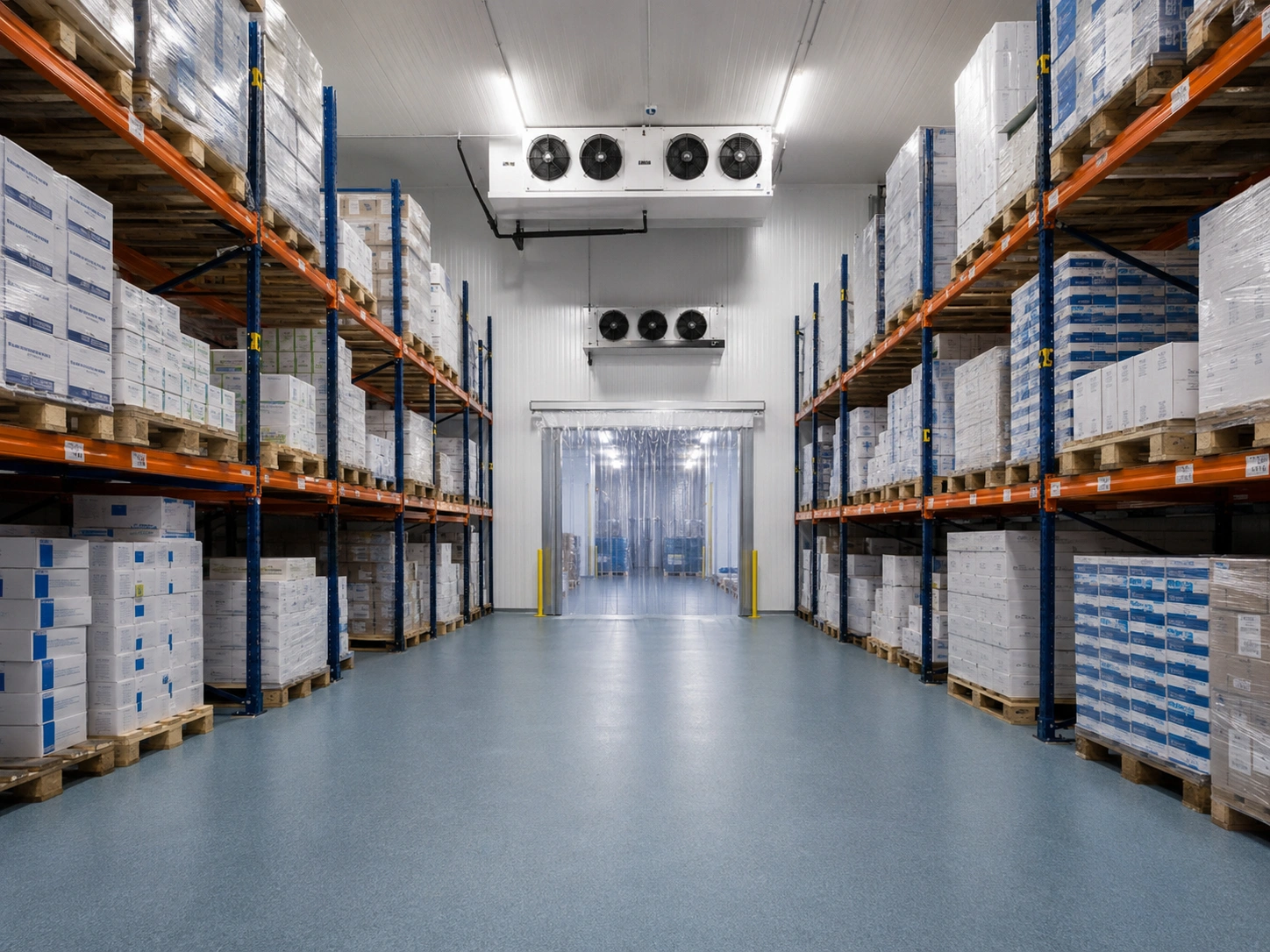
A cold storage refrigeration system has one job that matters every hour of the day: hold the required temperature while product moves in, doors open, ambient conditions change and the refrigeration load rises and falls. For industrial cold storage, that means the compressor, condenser, evaporators, vessels, pumps, valves and controls have to work as one system rather than as separate pieces of equipment.
Metalex engineers industrial cold storage solutions around the actual storage duty: product type, incoming temperature, target room condition, daily loading, pull-down time, room size, operating hours and Indian ambient conditions. The same application-first approach is used across Metalex industrial refrigeration applications. For ammonia-based plants, NH3 / R717 remains a practical industrial refrigerant when the system is designed, operated and maintained correctly.
Correct load calculation, compressor staging, heat rejection, evaporator airflow, refrigerant circulation, sensible defrost, door management and planned maintenance. Uptime is not created by one machine; it comes from keeping the complete refrigeration chain in balance.
How a cold storage refrigeration system works
The refrigeration cycle starts when the compressor draws in low-pressure refrigerant vapour from the evaporator side and raises its pressure. The hot discharge gas then rejects heat in the condenser and becomes liquid refrigerant. That liquid passes through the system controls to the evaporators, where it absorbs heat from the cold room, stored product, infiltration air and other loads before returning to the compressor.
In an ammonia refrigeration system for cold storage, the same basic cycle can be arranged in different ways depending on temperature and capacity. Moderate-temperature duties may use single-stage compression, while lower-temperature frozen storage can require two-stage compression or a different plant architecture. The selection should follow the operating condition, not a generic model size.
Why 24/7 cold storage efficiency drops in real plants
A plant can look correct on paper and still consume more power than expected after commissioning. The reason is usually not one dramatic fault. Efficiency is lost gradually through operating conditions that move away from design.
This is why an energy-efficient cold storage refrigeration system needs operating discipline after commissioning. The daily plant log matters. So do suction and discharge conditions, compressor staging, condenser cleanliness, defrost behaviour, evaporator condition and unusual changes in run time.
Core equipment in an industrial ammonia cold storage plant
The equipment shown in a typical cold-storage refrigeration package illustrates a useful point: the compressor is only one part of the system. A dependable plant needs each supporting component selected for the same duty, which is why industrial refrigeration plant equipment should be reviewed as one system.
Explore the Metalex MXT Series air cooled reciprocating ammonia compressor range for industrial refrigeration duties.
02 Pressure VesselExplore Metalex refrigeration pressure vessels, receivers, accumulators, separators and related plant equipment.
03 Genuine Spare PartsAccess Metalex genuine compressor spare parts, service support and maintenance assistance for refrigeration equipment.
04 WITT Pump 5050Explore WITT refrigerant pump solutions available through Metalex for industrial ammonia refrigeration circulation duties.
For plants with dependable compressor cooling water, the MX Series water-cooled ammonia compressor range can be reviewed against the project duty. Where compressor cooling-water availability is limited, Metalex also offers the MXT air-cooled ammonia compressor range. The compressor cooling arrangement should be selected from site utilities, ambient conditions and the actual refrigeration duty.
Cold storage load calculation comes before compressor selection
One of the biggest mistakes in a cold storage refrigeration project is choosing equipment before understanding the heat load. Room tonnage or storage capacity alone is not enough. The refrigeration plant must remove several loads at the same time:
- Heat entering through walls, roof, floor and doors
- Product heat from incoming goods that must be pulled down to storage temperature
- Respiration or process load where the stored commodity generates heat
- Warm and humid air entering during door openings
- People, lights, forklifts, motors and other internal loads
- Defrost recovery and operating load variation across the day
Only after these loads are understood should the engineer shortlist a cold storage compressor, evaporator duty, condenser capacity and the required ammonia refrigeration equipment. This is also where redundancy, future expansion and the number of rooms matter.
Different cold stores need different refrigeration conditions
A temperature-controlled warehouse is not one standard application. Chilled produce, dairy, frozen food, seafood, meat, pharmaceuticals and multi-commodity warehouses can require different room temperatures, humidity control, pull-down rates and air circulation. That application-first approach is part of Metalex industrial refrigeration engineering.
For buyers planning a complete facility rather than only equipment replacement, Metalex’s project division also supports temperature-controlled cold storage projects and broader industrial refrigeration project planning.
Practical checks for better 24/7 refrigeration efficiency
Track the room, not only the compressor. If room temperature recovery is getting slower, investigate door load, airflow, frost and product stacking before assuming the compressor is short of capacity.
Keep condensing conditions under control. Higher condensing pressure increases compressor work and should trigger a check of condenser condition, water quality and heat rejection.
Match compressor output to the real load. Capacity control and compressor staging should follow daytime, nighttime and pull-down demand instead of running the plant as though every hour is peak load.
Do not ignore refrigerant circulation. Vessels, liquid levels, valves and pumps have to maintain the conditions the evaporators and compressors were selected for.
Plan maintenance around uptime. Routine inspection, genuine spares and service access are cheaper than waiting for a small issue to become a shutdown.
What to share before requesting a cold storage refrigeration project
A useful first enquiry does not need a finished engineering drawing. Even approximate project data helps the refrigeration team start with the right questions:
- Stored product or commodity
- Total storage capacity, pallets or room dimensions
- Incoming product temperature and target holding temperature
- Daily loading quantity and required pull-down time
- Number of rooms and whether chilled and frozen duties are combined
- Project location and expected ambient conditions
- Available power and cooling-water utilities
- New plant, expansion, retrofit or equipment replacement
This data lets the project engineer move from a generic cold storage refrigeration system enquiry to a practical discussion about refrigeration load, ammonia compressor selection, vessels, evaporators, pumps, controls and service strategy. For a live project, you can also contact Metalex project support with these details.
Cold storage refrigeration system FAQ
Industrial cold storage commonly uses a vapour-compression refrigeration system with a compressor, condenser, pressure vessels, evaporators, valves and controls. For larger industrial duties, ammonia (NH3 / R717) is widely used because it is well suited to engineered refrigeration plants.
Ammonia is widely used in industrial refrigeration because of its strong thermodynamic performance and long history in food, dairy, seafood and warehouse cooling. The system still has to be engineered around the required temperature, load, safety provisions and operating conditions.
Efficiency depends on the complete plant: accurate heat-load calculation, correct compressor selection, good condenser performance, clean evaporator airflow, sensible defrost, controlled door infiltration, correct refrigerant circulation and regular maintenance. A good compressor cannot compensate for a poorly operated system.
A typical industrial ammonia refrigeration plant can include reciprocating compressors, condensers, high- and low-pressure vessels, evaporators, refrigerant pumps, valves, controls, safety accessories and genuine service spares. The exact equipment depends on the cold-storage duty and refrigeration architecture.
Start with the calculated refrigeration load, storage temperature, product load, pull-down time, evaporating and condensing temperatures, running hours, available utilities and expected part-load operation. Then select the compressor from verified performance data at that operating condition.
Metalex supplies ammonia compressors and industrial refrigeration equipment, while Refrigeration Projects supports cold-storage project discussions covering concept, equipment selection, system planning and commissioning support.
Planning a new cold store or improving an existing plant?
Share your product, capacity, room temperature, daily loading, project location and utility details. Metalex can review the refrigeration duty and guide the next equipment or project discussion.