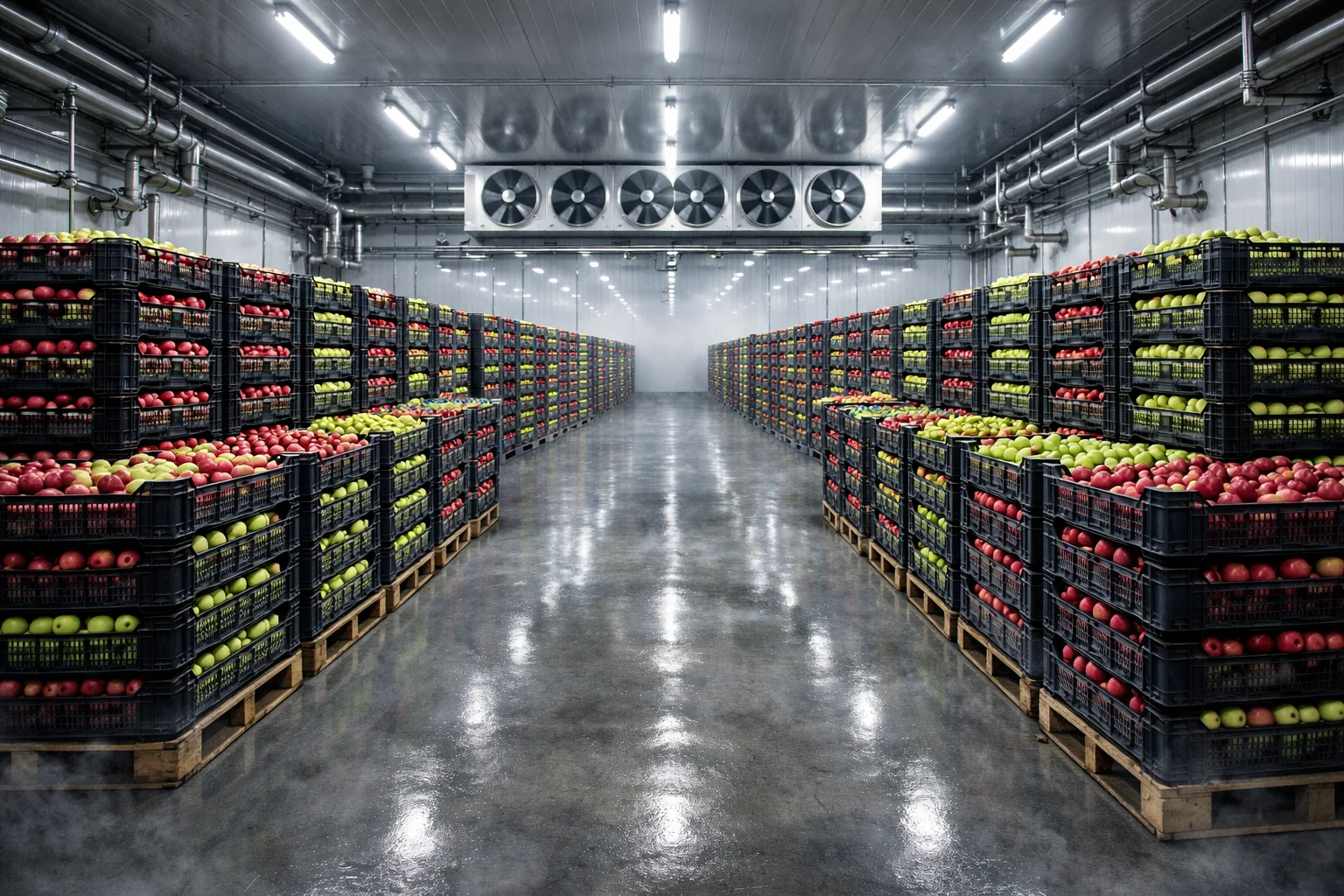
A cold storage project can create dependable, recurring business income, but there is no universal “profit per tonne” that applies across India. Two facilities with the same installed capacity can produce very different results because they serve different commodities, operate at different temperatures, experience different seasonal demand and carry very different power and finance costs.
The correct way to evaluate the business is to build a location-specific model around usable capacity, expected occupancy, storage cycles, tariff realization and operating cost. Capacity is only the starting point. The commercial result is determined by how consistently the facility remains occupied and how efficiently the refrigeration system performs.
Where cold storage revenue comes from
Most cold storage businesses begin with storage rent, but stronger projects usually develop more than one revenue stream. The exact combination depends on whether the facility is a conventional commodity store, a multi-commodity cold warehouse, a frozen store, a pack house or an integrated processing and distribution project.
- Storage charges: rental billed by tonne, pallet, crate, bag, chamber, cubic space or time period.
- Handling income: loading, unloading, pallet movement, stacking, sorting and dispatch services.
- Pre-cooling and pull-down: rapid removal of field heat before longer storage or transport.
- Pack-house services: grading, sorting, washing, packing, labelling and temporary holding.
- Freezing services: blast freezing or frozen storage for processed foods, meat, poultry, seafood or dairy products.
- Reefer and distribution support: refrigerated transport coordination, cross-docking and last-mile temperature-controlled delivery.
- Dedicated chamber contracts: a processor, exporter, retailer or food brand reserves defined capacity for a fixed period.
A facility that only waits for seasonal walk-in customers is more exposed to demand fluctuations. A project with anchor customers, annual contracts and value-added services generally has better revenue visibility.
A practical income formula
Annual gross revenue = usable capacity × average occupancy × annual storage realisation + handling and value-added revenue
“Annual storage realisation” should be calculated from the actual billing method in the target market. For a seasonal commodity, this may be the revenue earned per occupied tonne across one complete storage cycle. For a multi-commodity store with frequent inward and outward movement, the model may be prepared monthly and then totalled for the year.
Do not use installed capacity directly. Allow for aisles, airflow clearance, chamber segregation, pallets, operational buffers and any space that cannot be billed. The financially useful figure is saleable or usable capacity.
The operating costs that reduce income
Gross revenue is not profit. Cold storage is a power- and asset-intensive business, so a realistic model must include both operating expenditure and financing obligations.
| Cost head | What it includes | Why it matters |
|---|---|---|
| Electricity | Compressors, pumps, condensers, evaporator fans, defrost, lighting and auxiliaries. | Often the largest controllable operating cost; affected by temperature, ambient conditions and plant efficiency. |
| Labour and handling | Operators, supervisors, helpers, loading teams, security and administration. | Rises with frequent product movement and value-added operations. |
| Maintenance | Preventive maintenance, lubrication, spares, refrigerant-system service and electrical upkeep. | Under-budgeting maintenance may temporarily improve cash flow but increases breakdown and product-risk exposure. |
| Finance cost | Interest, principal repayment, working capital and bank charges. | A viable operating project can still face cash-flow stress if debt structure is mismatched with seasonal revenue. |
| Insurance and compliance | Asset, stock-risk, liability, fire, statutory inspections and licences. | Requirements vary by commodity, refrigerant, state and customer profile. |
| Losses and claims | Shrinkage, quality deterioration, temperature excursions, delayed dispatch or customer disputes. | Good monitoring and documented operating procedures protect both margin and reputation. |
What improves cold storage profitability?
The strongest improvement usually comes from several operational gains working together rather than one dramatic change.
- Higher annual occupancy: acquire customers before commissioning and avoid dependence on one short season.
- Correct commodity mix: match chamber temperature, humidity, airflow and handling to products with real local demand.
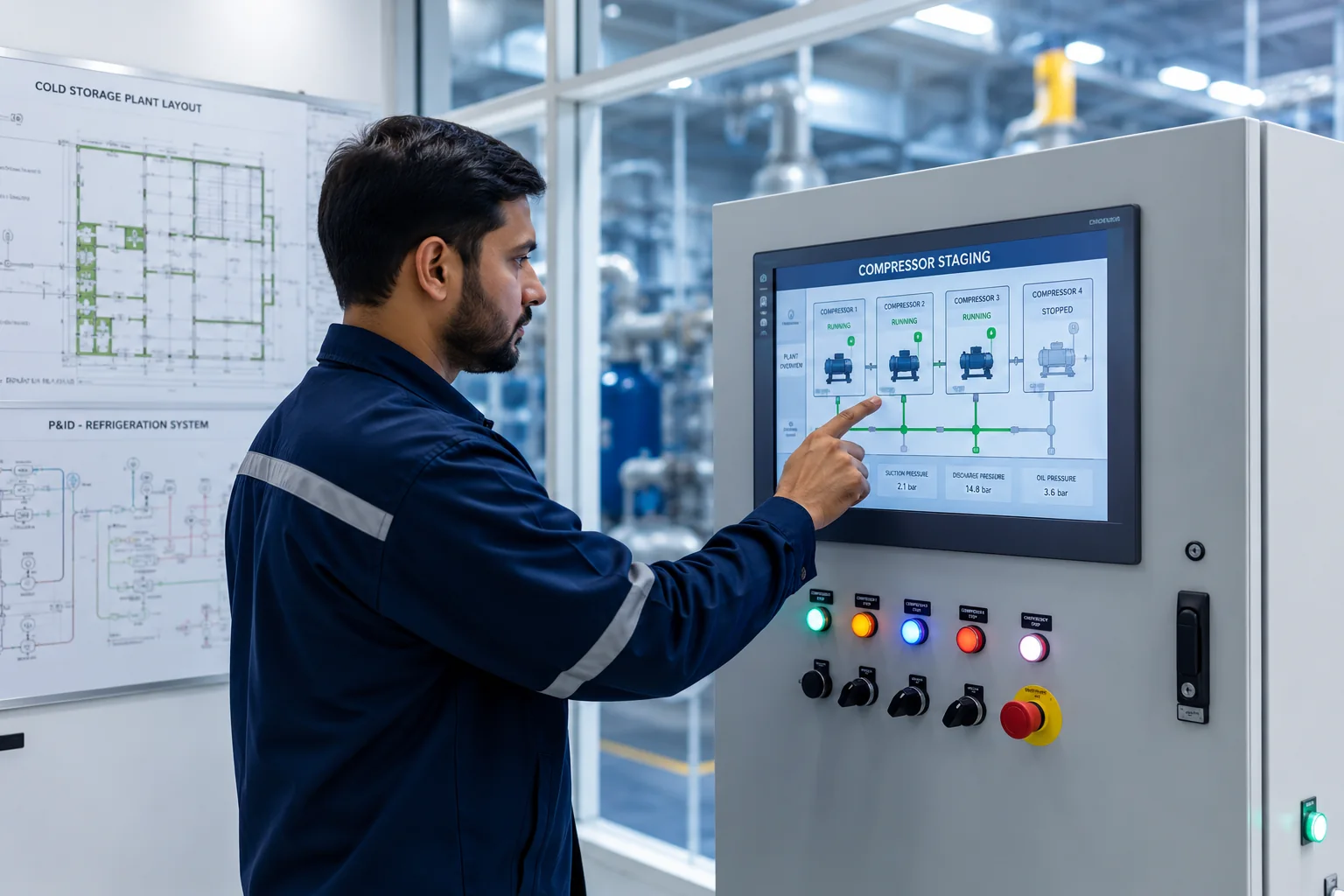
- Efficient refrigeration: correct compressor selection, condenser performance, insulation, door management and controls reduce power per tonne stored.
- Faster capacity turnover: where the business model supports it, more storage cycles can increase annual revenue from the same installed space.
- Ancillary services: handling, pre-cooling, packing, freezing and distribution can improve revenue per customer.
- Reduced downtime: preventive maintenance, critical spares and trained operators help avoid revenue loss and claims.
- Better receivable control: clear contracts, stock records and payment terms are essential in a seasonal business.
A profitable cold store is not simply a full building. It is a controlled operating system that converts reliable temperature, space and service into repeatable revenue.
An illustrative planning example
Consider a proposed facility with 5,000 MT installed capacity. After allowing for operational and airflow requirements, assume 4,500 MT is commercially usable. If the project expects 72% average annual occupancy, the equivalent occupied capacity is 3,240 MT.
The next step is to apply the local annual storage realisation—not an internet average. If the realistic annual realisation is represented as ₹R per occupied MT, core storage revenue is:
3,240 occupied MT × ₹R annual realisation, plus handling and service revenueFrom this amount, deduct power, labour, maintenance, insurance, administration, finance cost, taxes and a prudent allowance for repairs and claims. Prepare at least three scenarios: conservative, expected and strong. A project should not depend on the strongest scenario to meet debt obligations.
Common reasons income falls below projections
- Building capacity before validating commodity volume and customer commitment.
- Using 100% occupancy in the financial projection.
- Assuming all commodities can share the same temperature and humidity conditions.
- Ignoring seasonal low-load operation and the power performance of oversized equipment.
- Excluding working capital, interest during construction or delayed receivables.
- Competing only on low storage rent while carrying high energy and finance cost.
- Commissioning without trained operators, maintenance routines and emergency procedures.
What to verify before investing
Prepare a Detailed Project Report using actual site and market data. It should cover commodity availability, monthly inward and outward projections, target customers, tariff evidence, competing capacity, electricity supply, backup requirements, land and civil scope, refrigeration duty, financing, licences, subsidy eligibility and operating manpower.
Government support can improve project viability, but it should not replace a commercially sound business plan. Current scheme eligibility, cost norms and application windows must be verified directly with the relevant authority and financing institution before committing expenditure.
Frequently asked questions
Is cold storage a profitable business in India?
It can be profitable where demand, occupancy, tariff and operating efficiency are validated. Profit is not guaranteed by capacity alone; power cost, finance structure, customer mix and downtime have a major effect.
How is cold storage income calculated?
Start with usable capacity, average occupancy and actual storage realisation, then add handling or value-added services. Deduct all operating and finance costs to estimate cash profit.
Which cold storage business model earns more?
There is no universal winner. Commodity stores may benefit from concentrated seasonal demand, while multi-commodity and integrated facilities may earn from more cycles and services but require more complex design and operation.
What is the biggest cost in a cold storage business?
Electricity is commonly a major controllable operating cost, while finance cost can also be substantial. Their relative importance depends on project design, temperature level, utilization and debt structure.
Planning references
Technical and scheme context checked against the National Centre for Cold-chain Development, the Ministry of Food Processing Industries cold-chain scheme and the National Horticulture Board scheme portal.
This article is for preliminary business planning only. It is not a promise of income, subsidy approval, project cost or financial return.